

By Philip Jacklin
Time is of the essence on construction sites. Labor shortages, supply chain constraints and trade partner miscommunications are just a few factors that can contribute to delaying project timelines. While difficult or uncomfortable to discuss, jobsite injuries are also a significant contributor to project delays. Falls are the most common cause of injury and fatality to occur on the jobsite. In 2020 alone, more than 210,000 workers missed at least one day of work because of fall-related injuries, according to a report from the U.S. Bureau of Labor Statistics.
Since most falls are preventable, it stands to reason that most fall injuries are also preventable. Fall arrest equipment is effective in saving lives, but at the cost of minor injuries to fall victims. Since fall arrest equipment doesn’t prevent the fall, it can only hope to lessen the severity of fall injuries. Regardless, minor injuries can still result in missed work and further project delays. Preventing falls, planning ahead for fall protection and raising awareness not only helps to avoid unnecessary project delays, but can potentially save lives.
Fall prevention
While supplying anchors, harnesses and lanyards may be necessary for certain workers during the construction process, it’s important to acknowledge the distinction between fall arrest equipment and fall prevention equipment.
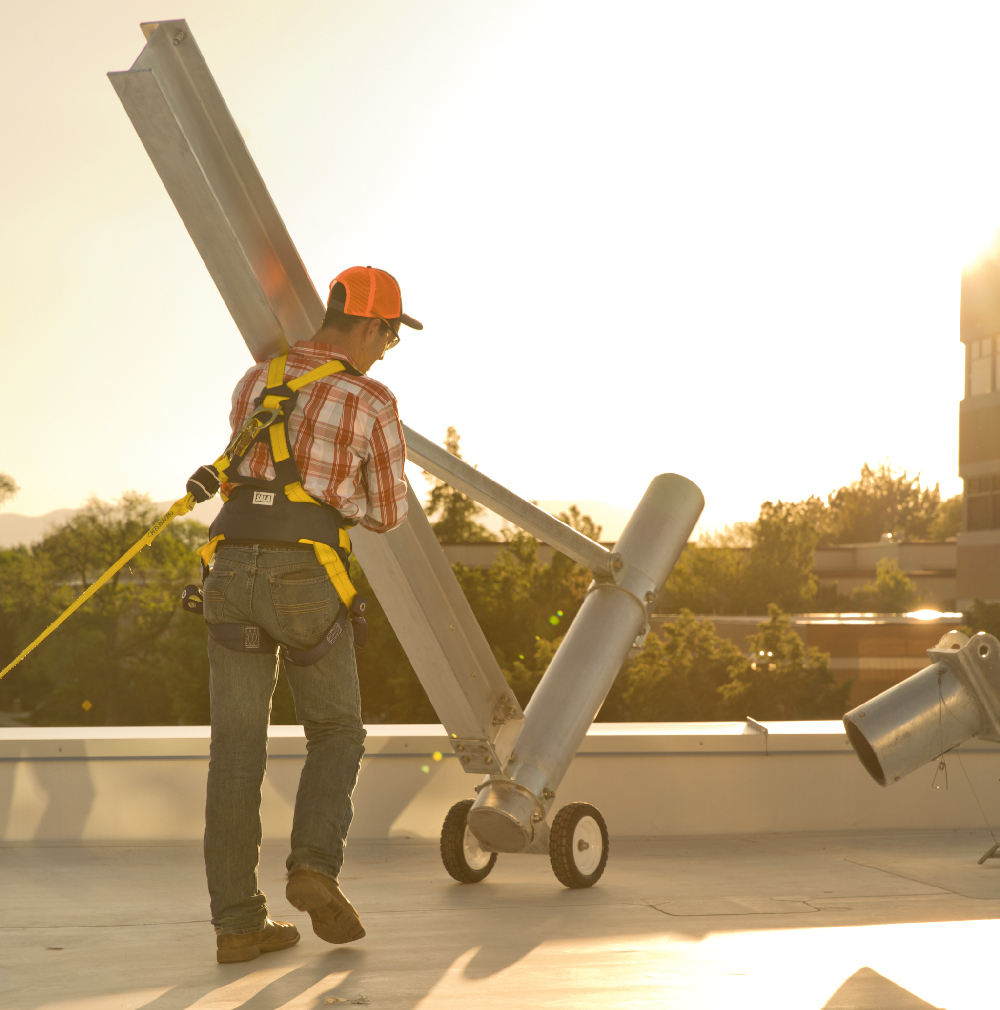
Fall arrest equipment should only be used when it’s been deemed infeasible to install guardrail or use other forms of fall protection. And while fall arrest equipment is effective in lessening the injuries incurred during a fall, it cannot prevent a fall from occurring. Whenever a fall occurs, even when fall forces are absorbed by fall arrest equipment, the fall victim can still experience hundreds of pounds of fall forces that could cause injury and result in some period of time away from the jobsite.
Fall prevention equipment, like guardrail on the other hand, would be much more effective in preventing the fall from occurring. Guardrail is also referred to as “passive fall protection,” because it requires no active input from the user to protect them from the fall. In fact, guardrail requires no inspections, certifications, maintenance nor training. As long as workers remain on the correct side of the guardrail, the fall hazard is almost completely eliminated. Also, passive fall protection systems have almost no effect on worker tasks, so their focus doesn’t have to split between their job task and maintaining personal safety. When practical safety measures are incorporated into building design, worker safety can be accomplished without compromising productivity. As a superintendent, being proactive about incorporating passive systems into site planning can help reduce incidents before they happen.
In addition, when falls occur on the jobsite, a decline in morale might take place, which can lead to decreased productivity or increased employee turnover — potentially causing further delays with fewer laborers available to work on the site. Those missed days from injured workers, combined with decreased productivity from other laborers on the site, can cause significant delays on a project. Major injuries or a fall fatality would likely exacerbate the negative effects on the jobsite and cause further productivity delays while trying to replace and train new workers.
Planning for fall protection
Federal OSHA 1926 requires construction companies to provide fall protection to workers once exposed to falls of six feet or greater. Fall hazards can be mitigated by various control methods; it is ultimately up to the building owner or employer’s discretion which methods are chosen — as long as the method is compliant with applicable OSHA & ANSI standards. However, despite the construction process presenting several challenges that can limit the fall protection options available to employers, there are still many methods that can be utilized at any stage of the construction process to properly protect workers. If superintendents are going to ask a worker to perform a task, it comes with a moral obligation to ensure the worker is provided the resources to safely perform the task.
When fall protection is considered earlier on in the building’s lifecycle, it allows fall protection engineers to design more cost-efficient and often simpler systems that can be utilized for the entire life of the building. For example, architects and building designers can specify high-parapet walls near rooftop HVAC equipment, or a rooftop anchor system for future exterior building maintenance, such as window washing. The anchors could also be utilized by a superintendent’s crew during certain phases of construction.
Raising awareness
Most companies strive to enforce OSHA fall protection regulations and encourage their employees to follow industry best practices. However, user neglect or equipment misuse are among the main reasons why falls occur, according to a 2021 study conducted by the Center for Construction Research & Training. The same study reported that workers were greater than eight times more likely to use fall protection equipment if they knew their employers required it. Simply raising awareness of fall hazards and educating workers about behaviors that promote safety at heights can be an effective way to prevent fall injuries from occurring, especially when reinforced regularly by the superintendent.
Company-wide fall protection awareness will also become a proactive tool in the continuous improvement of the fall protection program. While companies must authorize specific employees to perform elevated work and use fall protection equipment, everyone at the organization can help report potentially new fall hazards as they’re discovered. The additional eyes and ears on a jobsite looking for fall hazards or unsafe work behaviors will help keep everyone onsite working safer.
Preventing project delays by promoting a safer jobsite can have many benefits. BLS reports approximately 450,000 fall injuries annually, and roughly one in five resulted in the victim spending more than a month away from work. If all falls were prevented for just one year, 400-500 construction workers’ lives would be saved. Even if just one fall is prevented — and one life is saved — the effort is still worth it.
Phil Jacklin is continuing education program manager for Diversified Fall Protection.
 Join our thriving community of 70,000+ superintendents and trade professionals on LinkedIn!
 Search our job board for your next opportunity, or post an opening within your company.
 Subscribe to our monthly
Construction Superintendent eNewsletter and stay current.
Subscribe to our monthly
Construction Superintendent eNewsletter and stay current.