
Building trust, culture + people
By Kurt Zuegel
Ask anyone who’s spent real time in construction what the job demands, and you’ll get some familiar answers. Fast decisions. Clear communication. Problem-solving on the fly. Keeping schedules moving, trades aligned, clients informed.
But here’s what doesn’t get said enough: if you want to lead a team that can actually handle all that, you’d better be building more than just buildings. You need to be building trust, building culture and building people.In the field, leadership develops over time. It’s not about control. It’s about consistency. It’s about showing up in a way that makes your team want to follow, not because they have to, but because they trust you.
If you’re managing construction work, you’re managing people. And that means understanding leadership, mentoring and culture in ways that work on real jobsites — not just in theory.
Here’s what that looks like in practice.
The best leaders lead themselves first
In the field, you can’t fake it. Your team can spot insincerity a mile away. What they respond to is honesty, self-awareness and accountability.
At our company, we recently completed a leadership workshop that re-emphasized that one of the most overlooked aspects of leadership is how well a person leads themselves. That means knowing how you communicate when you’re under stress. Owning mistakes without deflecting. Recognizing when your tone is off and adjusting. Knowing when to push and when to listen.
The job doesn’t give you time for self-reflection but that doesn’t mean it’s optional. The best field leaders I know are constantly taking a mental inventory: Where am I getting in my own way? What kind of energy am I bringing to the site? What example am I setting when I think no one’s watching?
Leadership starts there. With you. Every day.
Mentorship doesn’t require a manual
Ask around, and most people in construction will tell you they didn’t get where they are by following a neatly designed career path. They learned by doing. By being around people who took the time to teach, to correct and to show them how to lead through action.
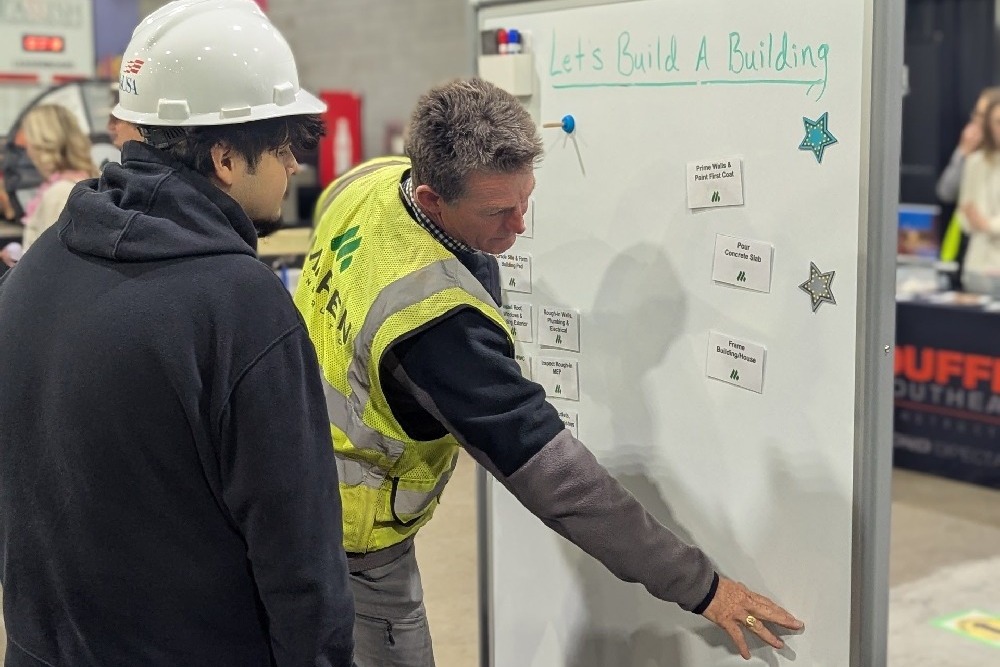
Mentorship on a jobsite is rarely formal. It’s in the way you review the day’s plan with a young field engineer. It’s in the side conversation with a new assistant super who’s still learning how to sequence trades or in those five-minute talks that turn into lifelong habits.
Great superintendents are almost always great teachers. They take the time to bring others up to speed. And here’s the part we often forget: mentoring helps you, too. It sharpens your communication. Forces you to explain your thought process. Builds a stronger, more capable team around you. Which, in the long run, makes your job easier and your projects better.
Choose influence over authority
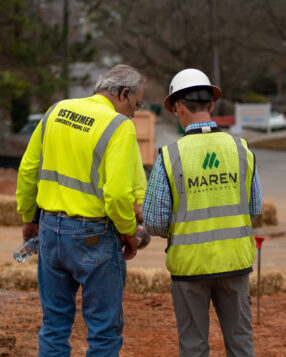
In construction, there’s always been a tendency to lead with authority. The title. The role. The weight of the position. It works for a while. But authority has limits. It can get people to comply, but it doesn’t motivate. It doesn’t inspire and it certainly doesn’t earn trust.
Influence, on the other hand, is earned. It comes from consistency. From how you handle pressure. From your willingness to ask questions instead of giving orders. From the respect you show to the people around you. The best field teams I’ve worked on didn’t run on fear or hierarchy. They ran on influence. People trusted their leaders because those leaders knew the work, showed up with integrity and stayed steady no matter what hit the schedule.
If you want your team to buy in, build influence. It may be a slower path, but it lasts.
Plan for real-time decision-making
Jobsite decisions happen fast. Delays, design changes, client input, coordination issues all show up without warning. And how a leader responds in those moments sets the tone for the whole team.
But quick decisions don’t have to be impulsive ones. Good field leaders develop a system, even if it’s not formal. They slow down just enough to ask:
- What are all my options here?
- What assumptions am I making?
- Who else needs to weigh in?
- What are the short-term and long-term consequences?
You don’t need hours to make smart decisions. Sometimes all it takes is a quick walk and a clear mindset. A simple process helps you move forward with confidence. We often think strategic thinking is for senior leadership. But in construction, the field makes hundreds of decisions a day. Strategic thinking starts in the field.
Culture isn’t a poster in the office
Talk about “culture” on a jobsite and you’ll get some eye rolls. But culture isn’t ping-pong tables or company swag. It’s how people treat each other, how they communicate and how they respond under stress.
Field culture shows up in the little things. Is it safe to speak up when something doesn’t look right? Are people willing to ask for help without getting blamed? Does information flow freely, or does it get held back? Culture doesn’t live only at the corporate office. Every jobsite has its own version and field leaders have a hand in shaping it. This shows up in how you run your morning huddles. How you handle setbacks. How you respond when a sub falls behind. Your actions shape the tone, and your tone shapes the results.
Building culture isn’t fluff. It’s one of the most powerful tools a superintendent has.
Clarity is everything
Want to keep a jobsite moving? Communicate clearly. Nothing derails a good team faster than confusion.
Clear expectations. Clear schedules. Clear roles. That’s what people need to do their job well. And it’s what sets great field leaders apart. They remove friction. They anticipate misalignment before it becomes a problem. They make it easy to know what success looks like, day-to-day. Fancy tools aren’t essential to create clarity. Consistency, communication and the willingness to repeat yourself (a lot) are.
Give people room to lead

Leadership isn’t a solo act. And the most effective superintendents are the ones who create space for others to lead.
That means encouraging ownership. Giving people the freedom to solve problems. Offering guidance when needed but trusting the team to execute.
If you want to build a high-functioning team, don’t hold all the answers. Ask better questions. Push responsibility down. Let others take the lead when they’re ready — even if they make mistakes. That’s how people grow. That’s how trust builds. And that’s how your team becomes more than simply a collection of job titles.
In construction, leadership sometimes gets treated like a separate skill or something you pick up in a class or read about in a book. But leadership is the work. It shows up when things go sideways and the team needs direction. It’s there when the schedule tightens, the plan shifts and people are looking for steady hands. You see it in how trust is built across trades, with clients and within the crew.
It doesn’t come from charisma or a perfect résumé. It comes from being the one your team can count on when the pressure’s on.
If you want to lead well in the field, don’t wait for a title. Start where you are. Lead yourself. Mentor others. Build clarity. Shape the culture. The results will follow.
Kurt Zuegel is a senior superintendent at MAREN Construction with more than 30 years in the field.
Images courtesy MAREN Construction.
 Join our thriving community of 70,000+ superintendents and trade professionals on LinkedIn!
 Search our job board for your next opportunity, or post an opening within your company.
 Subscribe to our monthly
Construction Superintendent eNewsletter and stay current.
Subscribe to our monthly
Construction Superintendent eNewsletter and stay current.