

By: Alan Limoges
Ask any superintendent what keeps a project on schedule in 2026 and the answer is simple: skilled operators. As the second quarter approaches, labor shortages and workforce development challenges continue to plague the construction industry. A 2025 survey conducted by Associated General Contractors found that 92% of construction firms in the United States struggle to hire qualified workers. Contractors have traditionally relied on hiring proven, experienced operators, but the constraints of the labor shortage make this an enduring challenge. Veteran operators are simply unavailable in sufficient numbers to meet demand. An aging workforce, increased infrastructure investment and heightened project complexity have all intensified competition for experienced operators. As senior operators retire and fewer young workers enter the trades, relying exclusively on pre-qualified talent becomes increasingly unsustainable as demand continues to accelerate.
At the same time, safety remains a top priority for the industry. According to Industrial Safety & Hygiene News, approximately 20% of all worker fatalities occur among construction workers, despite them comprising only 6% of the U.S. labor force. With workforce shortages intensifying, contractors must find pathways to expand their talent pipeline, accelerate jobsite performance and maintain rigorous safety standards.
High-fidelity simulation training offers a measurable way forward.
Expanding the talent pool with simulation training
Simulation training provides the tools and flexibility to circumvent labor shortages and develop skilled operators in-house. Instead of recruiting from a dwindling pool of qualified workers, superintendents can broaden their hiring criteria to include entry-level candidates or individuals eager to expand their skillset.
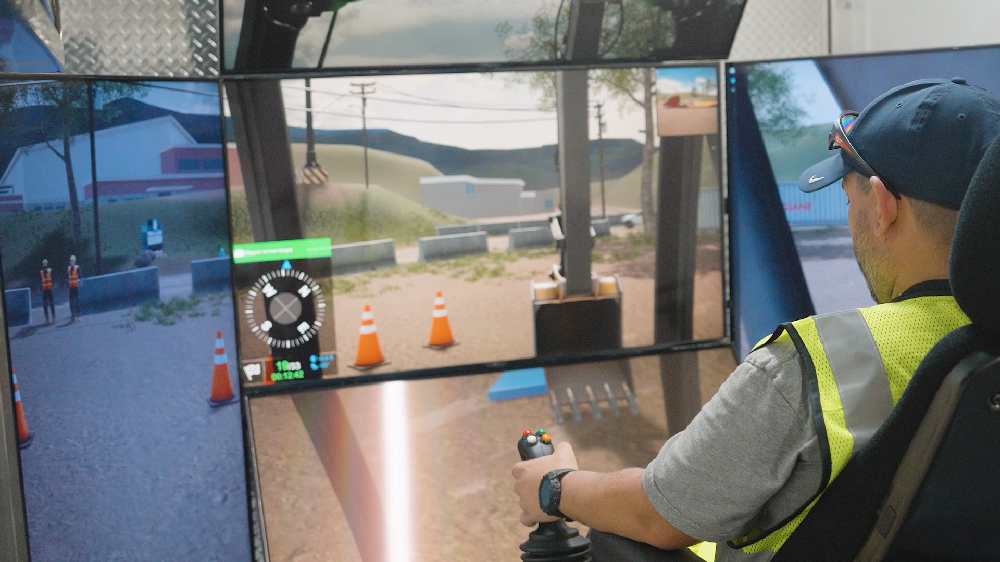
Through hands-on training that recreates authentic machine behavior, simulation training enables trainees to build real-world skills and controls familiarization before ever stepping onto active equipment. Live machines can be reserved for revenue-generating activities, while trainees hone their skills in a controlled environment, unaffected by weather delays and equipment shortages.
This approach empowers superintendents to expand their hiring pool without compromising safety or delaying active projects. Candidates can demonstrate aptitude before entering the field, enabling hiring decisions based on measurable potential, rather than prior experience alone. Contractors can recruit based on aptitude and trainability rather than years logged in the seat. It also opens doors to career changers, veterans and underrepresented talent pools who may not have prior equipment experience but demonstrate strong operational potential.
Objective performance data accelerates training
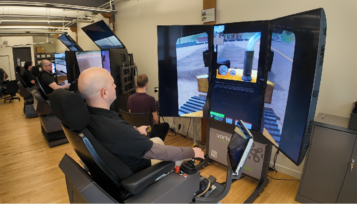
Hiring more broadly is a key component of the solution. The next challenge is developing operator competency quickly and consistently.
High-fidelity simulation training feels and behaves like the real machine, enabling operators to build confidence and machine familiarization in a compressed timeframe. Conewago Enterprises, one of the mid-Atlantic’s Design-Build general contractors, reduced its onsite crane training time from six months to seven weeks using simulation training technology. That quicker turnaround reduced their training costs by over 60%, from $40,000 to $15,000 per operator.
Training acceleration is driven by objective performance data. Simulation training provides measurable feedback that helps superintendents determine which trainees are reliable, engaged and ready for increased responsibility. Performance data also enables instructors to pinpoint the areas each individual student needs to develop. Rather than relying solely on mentorship or subjective evaluations, superintendents can increase class sizes without sacrificing training consistency.
This data-driven approach helps ensure superintendents can predictably verify the skills of new operators entering the field. Standardized performance metrics reduce variability across crews and provide clearer benchmarks for operator readiness, giving contractors greater confidence in staffing decisions and long-term workforce planning.
Ensuring safety + productivity
Even with broader hiring and faster training, safety cannot be compromised. A reckless or hazardous operator, even if trained in record time, is still unfit for the jobsite. Productivity and safety must remain in balance.
High-fidelity simulations address this tension by allowing operators to gain repeated, hands-on practice without the risks associated with live equipment. This reduces the likelihood of accidents, injuries, costly equipment misuse, fuel inefficiencies and production delays. On modern jobsites where equipment represents significant capital investment, minimizing operator error protects both assets and project margins. Structured training reduces exposure to preventable damage and unplanned downtime.
Meanwhile, instructors can inject equipment faults, inclement weather and other unexpected hazards into training scenarios, preparing operators for situations too dangerous to replicate on live equipment. This prepares trainees to respond effectively when real-world issues arise, ultimately creating a better prepared operator and safer jobsite. Better-trained operators contribute to fewer delays, fewer reworks, smoother sequencing and more predictable schedules, all of which directly support the bottom line. By incorporating simulation into workforce development strategies, superintendents can expand their workforce without increasing operational risk.
In a labor market that shows little sign of easing, contractors who standardize operator readiness will be better positioned to scale safely and competitively. Simulation training shifts workforce development from reactive to strategic, enabling superintendents to build capability rather than wait for it.
Alan Limoges is the product growth manager at CM Labs.
Photos courtesy CM Labs
 Join our thriving community of 70,000+ superintendents and trade professionals on LinkedIn!
 Search our job board for your next opportunity, or post an opening within your company.
 Subscribe to our monthly
Construction Superintendent eNewsletter and stay current.
Subscribe to our monthly
Construction Superintendent eNewsletter and stay current.