
Why every superintendent needs rigging knowledge — even if they never touch a shackle
By: Sean Fuller
Cranes command a unique kind of respect on the jobsite. Few pieces of equipment carry as much risk when something goes wrong. According to the Crane Inspection & Certification Bureau, roughly 90% of crane accidents trace back to human error, not mechanical failure — improper communication between personnel, poor load planning and misjudged movement paths. That statistic should keep every superintendent sharp, because our role in crane safety isn’t about operating the equipment. It’s about knowing enough to make sure everyone else is doing it right.
Get certified — not to rig, but to verify
Every superintendent who works jobsites that — even occasionally — require a crane should pursue a rigging certification, even if you’ll never touch a shackle. The knowledge gives you the credibility and the competence to ask the right questions before a pick, not after an incident.
Early in my career, I made a decision that changed how I run every jobsite: I sent my entire team, including myself, through a rigging certification class. Not because any of us were frequently going to rig steel or fly loads with the crane. We did it because a superintendent has to know whether the rigging is being done right or wrong. How can you make the proper call in such complex situations without an understanding of the fundamentals?
That investment can pay off in ways you don’t anticipate. I know of a project where someone photographed a concrete crew member using a scissor lift incorrectly. That single photo triggered a full-blown OSHA inspection. The crew couldn’t answer the OSHA inspector’s questions because they’d never acquired the knowledge — What is the weight of that scissor lift? What is that rigging rated for? What’s the crane’s capacity at that radius? This reinforces an important lesson — the superintendent who can’t evaluate a lift plan is the superintendent who can’t protect the site.
When it’s not your crane, it’s still your site
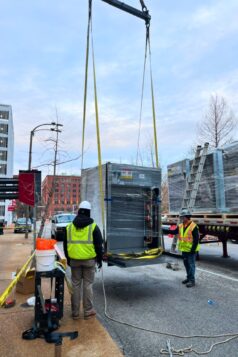
Here’s where a lot of superintendents get caught off guard. When a mechanical subcontractor brings in a crane to set rooftop units, it’s easy to think that’s their operation, their responsibility. But under OSHA’s multi-employer worksite policy, the general contractor superintendent is typically the controlling employer — you’re held responsible for safety compliance across the entire site, including a subcontractor’s crane work.
My rule is straightforward: whether we or the mechanical contractor is hiring the crane, the operator is responsible for providing us with the lift plan. We independently review it, verify the operator’s certification and confirm the rigger’s qualifications before the crane sets up. Inadequate inspections, unqualified signal persons and unqualified riggers are consistently among OSHA’s most-cited crane violations — and carry serious penalties. Those citations don’t just land on the sub — they can land on you.
Every lift deserves a plan — no exceptions
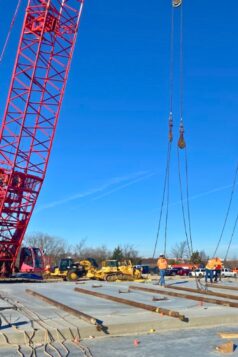
Whether it’s a two-story elementary school or a high-rise tower, every single time a crane is used on a project, there must be a lift plan. That crane lift plan should always include load details, crane specifications, rigging configurations, ground conditions, clearance issues and any environmental factors like nearby power lines or adjacent buildings.
The day of the pick adds a layer of considerations — wind speeds, temperature, precipitation and forecasted lightning. These conditions each add an element of caution that needs to be accounted for. Additionally, ground conditions matter more than people realize. What kind of surface is the crane sitting on? Have you tested the soil? Is your cribbing adequate for the outriggers? Incidents start with assumptions made in a hurry. Yet, conditions often change quickly, limiting your window to evaluate the right call. This is where proper training is invaluable.
Additionally, as a superintendent, challenging yourself and your team to think about the impact of our logistics decisions outside the immediate site boundary consistently produces less disruptive, safer outcomes.
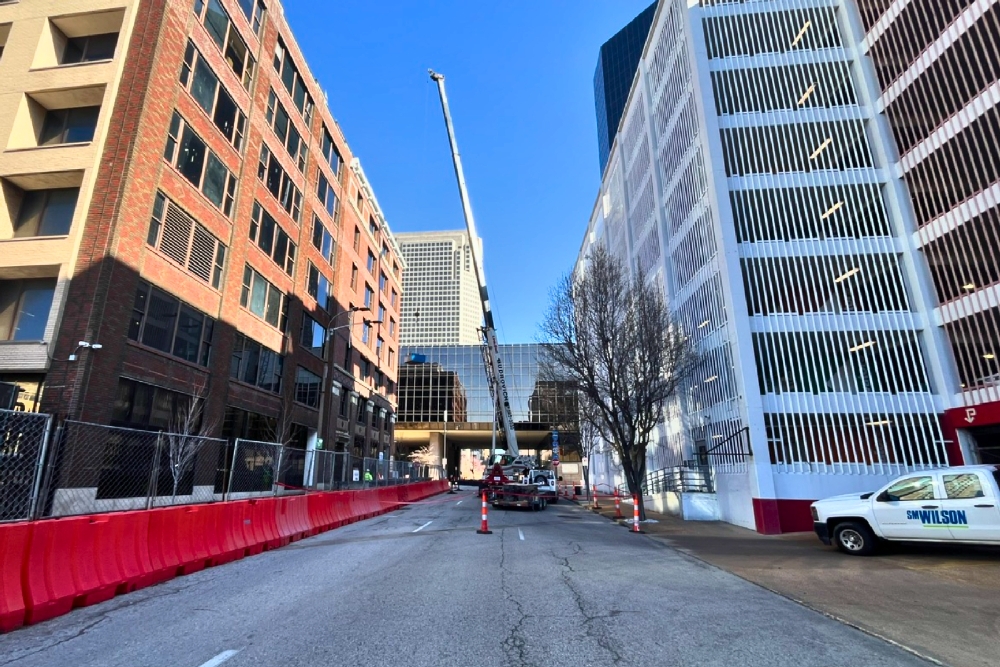
On a recent project in downtown St. Louis, Missouri near Busch Stadium, we had to coordinate road closures, notify a neighboring parking garage and schedule lifts around the baseball calendar. None of that complexity showed up in the structural drawings — it all came from understanding the environment beyond the construction fence.
The highest risk: the pick you can’t see
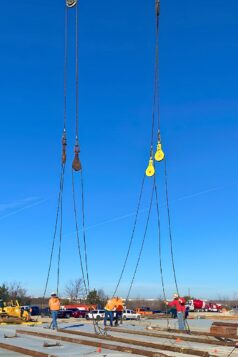
Some of the highest-risk moments in crane work involve blind picks, where the operator can’t see the load or the landing zone. He’s pushing controls based entirely on what the rigger on the ground is telling him. And more often than not, the rigger and the operator work for different companies. There’s no formal certification for that coordination. It’s all built on communication, trust and experience.
As superintendents, we have to ensure the communication link is solid before the crane starts moving. A pre-lift meeting isn’t a formality — it’s the moment where the rigger and the operator align on signals, sequencing and contingencies. Skipping it because the crew has “done this a hundred times” is exactly the kind of complacency that feeds the 90% human-error statistic. When people become complacent because they’ve been doing it for so long, they lose focus at exactly the wrong moment.
The best safety tool on any jobsite
Crane technology is improving. Anti-collision systems on multi-crane sites, load-warning lockouts and 3D lift-planning software from crane companies are all making the job safer. But the best safety tool on any jobsite is still a superintendent who knows what to look for and isn’t afraid to stop a lift that doesn’t look right. Get the certification. Educate your team. Review every plan. Ask the hard questions. That’s the job.
Sean Fuller is the director of field operations with S. M. Wilson & Co.
Images courtesy of S.M. Wilson & Co.
 Join our thriving community of 70,000+ superintendents and trade professionals on LinkedIn!
 Search our job board for your next opportunity, or post an opening within your company.
 Subscribe to our monthly
Construction Superintendent eNewsletter and stay current.
Subscribe to our monthly
Construction Superintendent eNewsletter and stay current.