
By: Josh Farr
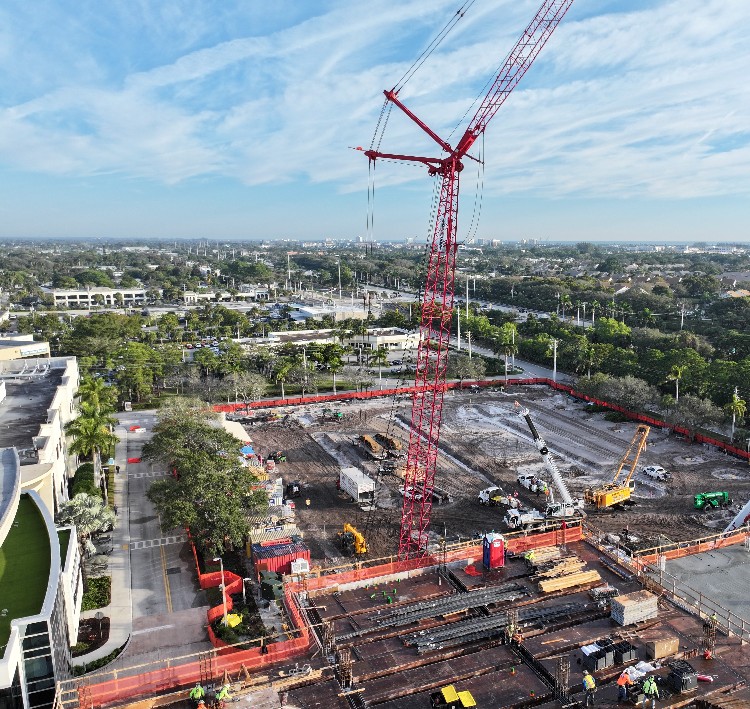
Respected and feared — that’s the general sentiment about cranes on jobsites. We need them, but few types of construction equipment require as much detailed planning and safety consideration.
Regardless of class or size, the very nature of cranes demands careful evaluation in the earliest stages of the project, ensuring effective budgeting and reducing the possibility of coordination obstacles later in the project.
The big lift: preconstruction
A successful project begins with successful preconstruction.
One key element to accurate planning and estimation is ensuring the superintendent is engaged in the preconstruction phase. Being able to share experience from coordinating day-to-day activities on the jobsite improves numerous project outcomes, including crane selection.
While crane selection is only one of hundreds of tasks that take place during preconstruction, it is informed by — and informs — other significant activities. To plan for cranes efficiently, construction teams must evaluate building structure, site logistics and crane capacity, and anticipate any safety concerns throughout a project’s duration.
1. Building structure
Analyzing the building’s structure will help you choose the type of crane needed, whether it be tower, mobile, crawler, fixed or other. What kind of materials will it be picking? What kind of reach will it need? To better understand what material will need to be moved, engage key structural trades such as concrete, steel, windows and MEP.
Involving them in the preconstruction stage and, ideally, even as early as design, can result in multiple benefits, including simplifying overly complex assemblies, identifying additional opportunities to prefabricate or flagging constructability issues. After collecting their feedback, you’ll be better positioned to understand material weights and required reach, resulting in a more complete data set when choosing your crane.
2. Site logistics
Next question: What are you building and where is it located in relation to other structures? For example, crane use on a new building with significant green space surrounding the site is going to have fewer logistical constraints than building on an existing campus or in a downtown corridor.
While every project comes with its own challenges, one element I often see missing in crane planning is the consideration of what’s happening beyond the immediate construction site. I’ve experienced a lot of positive outcomes from challenging myself and my team to think outside the box on the impact of our logistics decisions.
Sometimes those impacts are operational. On one project, I coordinated two tower cranes to serve the construction of a 12-story hospital tower on a postage stamp-sized site. While that was challenging enough, the existing hospital’s helipad was only feet from the tip of the crane when its boom was unlocked. We also had to ensure the booms of both cranes cleared one another, despite being 180 feet from one another. Those decisions clearly affected not only our construction site, but also the adjacent, fully operational hospital, which happened to be the only Level I trauma center within a 150-mile radius.
In other cases, our impact is more direct, and we have to be mindful not to lose touch with the people our facilities serve — whether it’s patients, customers or residents nearby. While working on my last few healthcare projects, I came to work every day with the mindset that when someone arrives on the hospital campus, they could be having the best or worst day of their life. In either case, how can we make sure that they don’t experience unnecessary stress due to our actions?
Adopting this concept doesn’t mean you can’t do what’s needed to complete the project, but it does require looking at the human impact and determining if there’s a way to make it easier — even if that means more effort on our part.
For example, if we determine that we have to shut down a street due to crane activity, ask yourself: Do people use the street primarily for vehicle traffic or foot traffic? Could we shorten the duration of the street closure? Could we create a better plan to safely allow pedestrian traffic or one-way vehicle traffic to lessen the impact? Small changes can make a big difference in our communities.
3. Crane capacity and safety
Every crane has reach-to-weight ratios required for safe picking, and the next step is understanding those limitations in relation to the orientation of the building. Based on your crane load chart, determine the capacity percentage of your maximum weight and your furthest reach. Your crane supplier can also help with this process and support the development of crane plans based on the crane class and size.
From a safety perspective, while most crane manuals say 90% capacity is the maximum, I always stick to 75% or less, which is also driven by my company’s policies and procedures. While that may result in opting for a crane that is the next size up — and will likely be a cost increase — the peace of mind knowing that a slight weight variance won’t place your jobsite in danger is more than worth it. It’s also proactive risk management. If there is a material swap later in the project, and you opted for the smaller crane, you’d likely have to absorb a schedule loss and additional cost at a later point.
Another crane capacity consideration is its ability to serve multiple trades throughout the project, which requires coordinating each trade’s use of the crane. Whether it’s a whiteboard or a technology platform, there must be a mechanism for recording when and how the crane will be used. For example, setting a rooftop unit is faster than concrete activities. Considering how these activities will be coordinated and their associated schedule impacts may also drive you to elect to have multiple cranes onsite instead of one.
During the high-level planning, we also can’t forget what’s going to happen on the ground — namely, the importance of the crane mat. It’s easy to get in a hurry when making last-minute adjustments — maybe we make assumptions or forego the appropriate steps in the process — but that only opens the door for incidents. After establishing your site plan, test soil samples for every location where you intend to place your crane. Ensure the areas can support the level of pressure the crane will exert on the ground and calculate the appropriate-sized crane mat to support it.
The best tool we have in construction is our ability to plan and, with that, the skill and experience to foresee potential obstacles. When we approach construction strategically, allow flexibility for unknowns and emphasize the importance of following tried-and-tested processes, we can build more confidently and safely.
Josh Farr is a superintendent with construction firm Robins & Morton.
 Join our thriving community of 70,000+ superintendents and trade professionals on LinkedIn!
 Search our job board for your next opportunity, or post an opening within your company.
 Subscribe to our monthly
Construction Superintendent eNewsletter and stay current.
Subscribe to our monthly
Construction Superintendent eNewsletter and stay current.