
By Emory Sweeney
Across the construction industry, companies are working to address the labor shortage by promoting the opportunities available in the skilled trades. For general contractors, the challenge is twofold: attracting new recruits while also supporting the career growth of current employees. A key part of this effort is shifting perceptions about what a career in the trades really looks like. Our industry already talks about changing the prevalent narrative in America that college and careers in services are the only path to success. We know the trades offer great earnings without college debt. One blind spot, however, has been the lack of focus on developing skilled tradespeople in ways that open up diverse career paths, including tracks that could lead to leadership roles on the management side of construction, if that’s what individuals are looking for.
Renewing a focus on technical building skills
I’ve been in the industry 14 years. I’ve seen how technology has helped us build more efficiently than ever before and make our work safer. These are tremendous advances with benefits for project stakeholders throughout construction delivery. However, while things like Virtual Design & Construction have made our work exponentially easier, we’re seeing gaps in technical learning. While few of us miss paper drawings and outdated processes, those legacy methods required everyone in the field to deeply engage with the technical aspects of building. Getting that back takes a conscious approach.
Here in DPR’s Central region (which includes Texas and the Mountain States), we’ve started a field leadership program for early-career superintendents. Our initial cohort is 18 folks from across the region taking time away from their jobsites to learn technical skills from our company’s veterans. Over six courses, participants are learning the technical aspects of sitework, building controls, existing conditions and more.
These modules are presented by senior field operations team members who use their real-life experiences to inform discussions. While most are familiar with the high-level view of these topics, the courses are getting to the true ground-level view and, we believe, graduates will walk out better prepared not only to do the job of superintendent work, but also to help foster knowledge with foremen and crews across our business. We’re hopeful to scale our regional program across the company.
We’re also focused on developing our early career teammates. In 2026, DPR is launching a Builder Development Program for new employees joining the company right out of college. They will spend 18 months quickly broadening their industry knowledge and technical skills, focusing on field work, MEP and self-perform work. These teammates will be active participants on projects, working alongside experienced builders and crews to learn construction fundamentals as they contribute to the team. They will finish the program with knowledge of how to navigate the company and experience with different roles involved in building our projects, as well as more confidence in their skills and a clearer understanding of their strengths and interests.
The soft side
Technical skills are essential in the field. But when paired with the soft skills often emphasized in office roles — like leadership, coaching and communication — they unlock even greater career potential.
To that end, we’ve launched a foreman development program across the country. This course focuses on several modules familiar to anyone working in an office. We believe they should also be available to the craft. We’ve had more than 360 participants so far, and the feedback has been overwhelmingly positive. Some participants have shared how it’s not only changed the way they lead and engage with members of their teams, but how what they’ve learned has even helped them at home with their spouses and families.
New pathways to success
I believe these programs together show how we care about growing our people. They see the investment we’re making and it helps grow their confidence, while becoming the best builders they can be. For a lot of folks, it’s the first time they’ve had these kinds of training. I also believe these programs expand career paths at a time when we need to do all we can not only to recruit talented people, but also retain them.
The traditional worker-to-foreman-to-superintendent path will always exist. But through the training we’re giving, we may see some superintendents consider a project management track. We’ve seen PMs and PEs pivot to the superintendent track, so why not the other way? Projects are where the rubber meets the road in our business, though, and we may see some on the superintendent track consider how their knowledge can lead to roles with safety, construction technology and maybe even company leadership positions.
The bottom line: if we’re serious about workforce development, it’s not just about recruiting, it’s about investing in growth.
By breaking the traditional thinking of where roles “fit,” I believe we can show people interested in construction that whether you’re entering the industry from the field or the office, you can still chase what you are passionate about as your career grows. Best of all, the result will be better buildings and outcomes for everyone involved in the project lifecycle.
Emory Sweeney is a DPR Construction senior superintendent based in Austin, Texas.
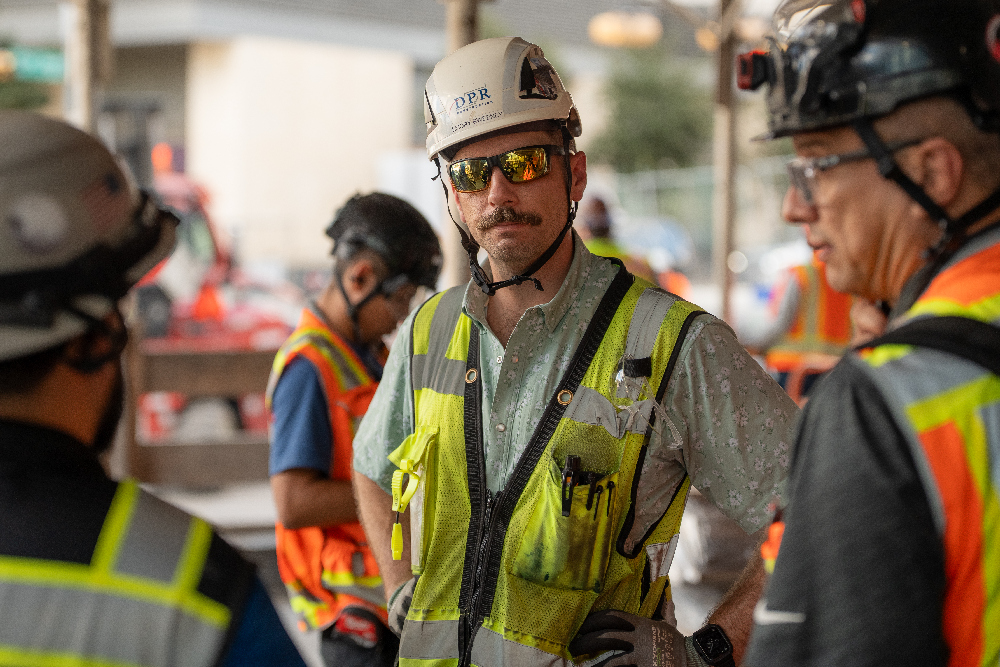
Photo by Ran Jones, DPR Construction
 Join our thriving community of 70,000+ superintendents and trade professionals on LinkedIn!
 Search our job board for your next opportunity, or post an opening within your company.
 Subscribe to our monthly
Construction Superintendent eNewsletter and stay current.
Subscribe to our monthly
Construction Superintendent eNewsletter and stay current.