

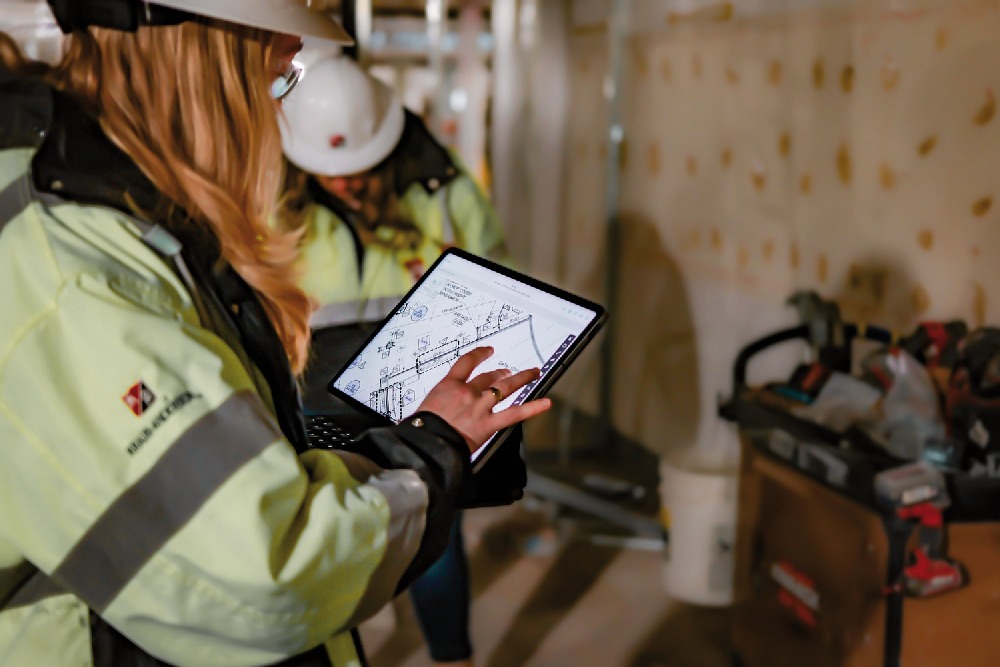
Top 5 ways the jobsite got smarter with AI
By: Tony Peleska
The times they are a-changin’ – that’s the understatement of the year.
It wasn’t long ago when artificial intelligence was a concept so revolutionary that the only early adapters who understood its applications were a few vibe coders and logic theorists from the mid-20th century. But a decade ago, managers began using AI software in scheduling, then in cost estimates and various forms of reporting and data analysis. AI is no longer an emerging technology; it’s the norm. Every large corporation and small business, and every office and employee, use AI as a daily business tool for tasks we thought were not possible.
Construction companies are embracing AI because it helps them address some of the industry’s biggest challenges, including productivity, communication, decision-making, project schedules, rising costs and safer, more efficient jobsites — and even lending a hand in the writing of this article. Today, AI has become as common as a hard hat on today’s jobsites.
1. Productivity
One of the primary benefits of AI adoption is productivity. Traditionally, project managers and superintendents spent hours every day reviewing and organizing enormous amounts of information generated on jobsites. By improving documentation accuracy and accessibility, AI helps teams maintain better records, strengthen communication between field and office personnel, reduce administrative workload and provide a clearer history of a project’s progress.
AI can help identify missing information, prioritize issues and ensure action items are assigned and followed through to completion. With faster access to critical project data, superintendents can spend more time coordinating crews, monitoring progress and addressing field conditions.
Minneapolis, Minnesota-based Kraus-Anderson uses an AI-powered project assistant that enables field managers to ask questions in everyday language about drawings, requests for information, submittals, specifications and project documents. For example, a manager can ask if an item has been approved or if an RFI has been answered. AI quickly searches the project database and returns accurate answers with links to the original source. By cutting time spent looking for information, AI reduces the risk of using outdated documents.
In addition, jobsite photos and field data are organized automatically, making project records easier to manage and retrieve. Inspections, checklists and tracking are streamlined, helping supervisors spend more time in the field and less on administrative tasks.
 2. Communication
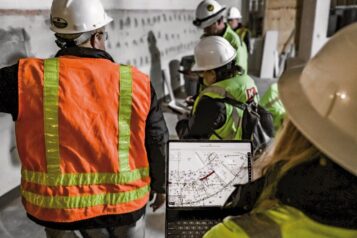
Communication is a major priority where AI is transforming construction jobsites. Miscommunication remains one of the leading causes of costly project delays. AI tools can automatically summarize project meetings, generate action items and distribute updates to team members. This helps ensure that owners, architects, contractors, subcontractors and field crews all have access to the same information at the same time. Better communication reduces misunderstandings, accelerates decision-making and keeps projects moving forward.
In addition, AI-powered communication tools can translate conversations into multiple languages, which is particularly valuable for today’s increasingly diverse workforce. AI translation and transcription tools help eliminate language barriers by providing real-time translations of safety meetings, work instructions and project documentation. This improves understanding, reduces mistakes and creates a more inclusive work environment.
3. Decision-making
Another key benefit of AI is allowing construction managers to make decisions based on data rather than intuition alone. From estimating costs to forecasting project risks, AI provides information that helps managers respond more quickly to changing conditions. Real-time insights and analytics from field data help supervisors prioritize and monitor work, keeping projects on schedule.
We use an internal large language model, a form of AI technology like ChatGPT, which is hosted on the company’s server within a restricted cloud environment, ensuring complete privacy, security and compliance. KA’s model hosts built-in research and can access grounded live government data and retrieval-augmented generation for construction. RAGS pulls trusted data and incorporates it into a model before the model produces a response. This process provides precise and accurate responses rather than generating content that can lead to information that sounds plausible but is factually incorrect and can result in misleading conclusions.
It also provides managers with integration into internal documents and data, along with AI toolset, which combines software programs and plugins to perform specific tasks, such as coding or system management.
 4. Safety
AI is playing an increasingly important role in maintaining safe jobsites. For example, computer vision systems can analyze jobsite photos or video feeds to identify unsafe conditions. Predictive AI can also analyze historical incident data that can identify patterns where future safety risks are most likely to occur so companies can take preventive action.
Rather than waiting for problems to happen, the technology alerts project teams to potential safety hazards, recurring quality issues or schedule delays. It can detect trends in failed inspections or repeated safety incidents and recommend areas requiring immediate attention.
AI platforms can also analyze project timelines, historical performance, labor availability and weather forecasts to predict potential delays. Project managers can use these insights to adjust schedules, reassign resources or order materials earlier, minimizing disruptions and helping projects stay on budget.
5. Invoice processing
AI also provides automatic invoice processing for timely payments to subcontractors. We use a tool that manages the entire invoice-to-payment lifecycle, eliminating manual data entry, matching purchase orders and resolving discrepancies. It also automates complex administrative processes, including invoice review, approval and subcontractor payment management.
As AI technology matures, its role on construction jobsites will continue to expand. Companies that successfully integrate AI into their operations are discovering that it doesn’t replace experienced builders — it enhances their expertise. By streamlining communication, improving productivity, increasing safety and reducing administrative burdens, AI helps project teams make better decisions, minimize costly delays and deliver better outcomes for everyone involved.
Tony Peleska is chief information officer at Kraus-Anderson Companies.
 Join our thriving community of 70,000+ superintendents and trade professionals on LinkedIn!
 Search our job board for your next opportunity, or post an opening within your company.
 Subscribe to our monthly
Construction Superintendent eNewsletter and stay current.
Subscribe to our monthly
Construction Superintendent eNewsletter and stay current.