
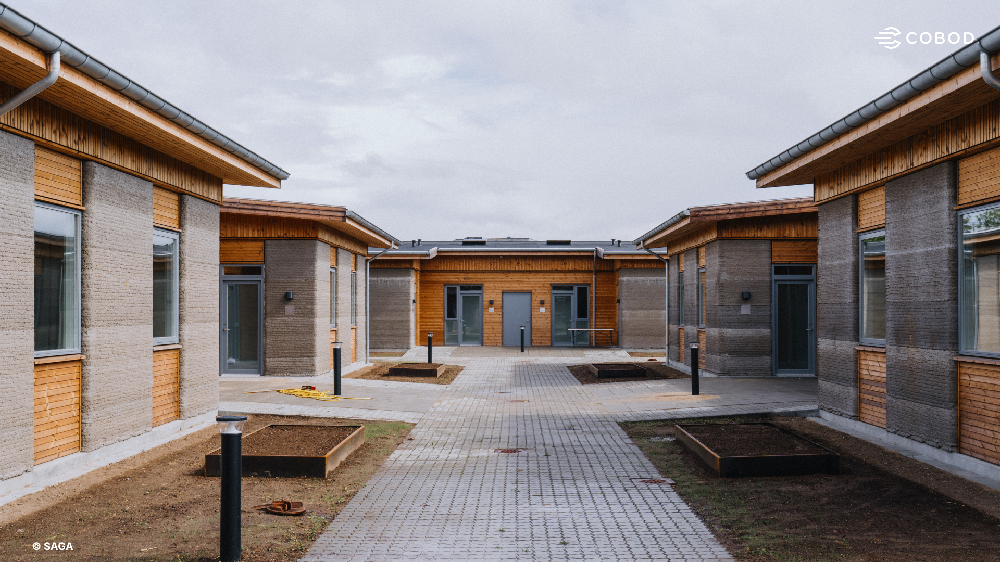
In Denmark, a student village of 36 3D-printed apartments — Skovsporet, or “The Forest Trail” — has been completed by 3DCP Group. Printed onsite using a COBOD 3D printer for affordable housing organization NordVestBO, The Forest Trail is Europe’s largest 3D-printed housing project — and its first students have moved in.
Each of the apartments were printed onsite by a single BOD3 construction 3D printer by COBOD, operated throughout by the same crew of three workers, who completed one building of six apartments in just five working days. A conventional site of this size would need considerably more workers on the wall trades alone. The machine handles the heavy, repetitive lifting that wears crews down, making the job safer. Because it prints from a digital model, the walls are built to a high standard of precision and quality.
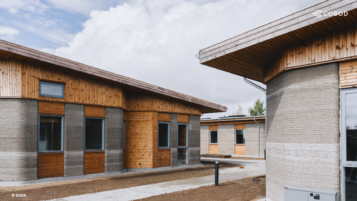
Using conventional building methods, the buildings’ curved walls and rounded forms would be cost-prohibitive: whether laid in brick, cast in bespoke formwork or assembled from precast elements, every curve adds cost. But 3D printing a curve costs no more than a straight line, so the attractive design came at no premium.
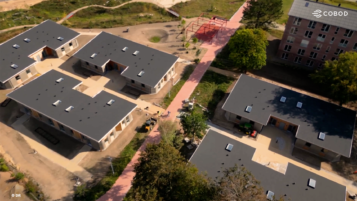
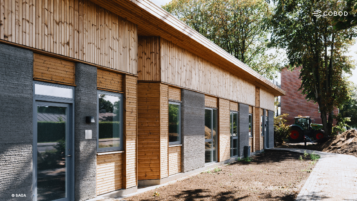
The total project size equals ~17,800 square feet, with apartments ranging from ~410-540 square feet in six clusters of six units. Inside, every apartment works as a full home (kitchen, study space, lounge, bathroom and sleeping area) with generous roof windows and sloped ceilings drawing daylight deep into the rooms. Printed concrete sits alongside timber, cork paneling and glass for a warm, Scandinavian feel. The six buildings surround shared courtyards, while gardens, footpaths and bicycle parking help foster a sense of community without sacrificing residents’ privacy.
Designed by SAGA Space Architects with MS+, the village sits next to VIA University College in Holstebro. The construction cost was ~$205 per square foot for the buildings.
Improvements in sustainability followed from the 3D printing. The team sourced materials locally, including a cement that emits up to 30% less CO₂ in production than traditional cement. In addition, the site was handled with the same restraint: the buildings were slotted in among the existing trees, leaving 90% of them standing.
 Join our thriving community of 70,000+ superintendents and trade professionals on LinkedIn!
 Search our job board for your next opportunity, or post an opening within your company.
 Subscribe to our monthly
Construction Superintendent eNewsletter and stay current.