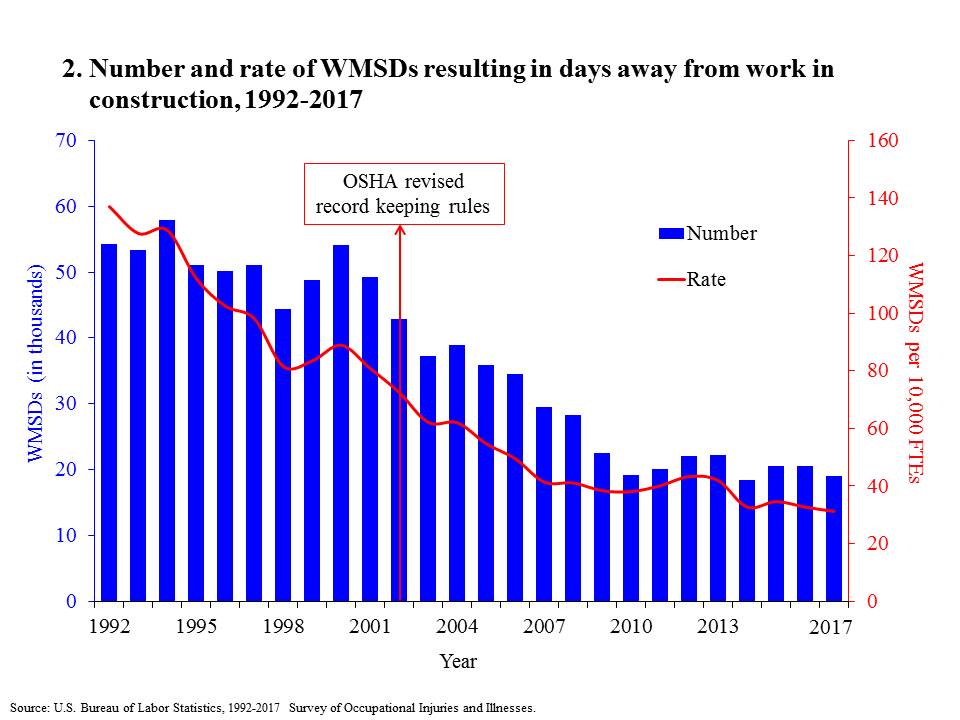







The new Quarterly Data Report from The Center for Construction Research and Training examines trends in work and non-work related musculoskeletal disorders, the soft-tissue injuries caused by exposure to repetitive or sudden motions, forces and awkward positions. In 2017, the rate of employer-reported, work-related MSDs in construction was 31.2 cases per 10,000 FTEs, less than one-quarter of 1992’s level. However, about 30% of construction workers self-reported they had low-back pain (work- or non-work-related), and that figure has not changed significantly. Moreover, nearly half of construction workers reported they had one or more MSD symptoms, such as neck pain, joint pain and back pain. Older workers were more likely to … Read more
New Award Recognizes Innovative Safety Interventions
The new Liberty Mutual Safety Innovation Award in Construction recognizes innovative Evidence-Based technologies, work practices and programs designed to reduce or eliminate construction hazards that lead to injuries and pain in the construction industry. The award is sponsored by Liberty Mutual Insurance and administered by CPWR. The award was established to: Encourage the development of innovative hazard reduction interventions Educate the construction community about safety and health hazards of national concern and promote widespread use of interventions to address them The winner will receive a $15,000 cash prize and a plaque. In addition, one or more honorable mention awards may … Read more
5 Ways to Shake Up Your Safety Training
At 20 years old, Regina McMichael’s husband died after falling off a roof at a jobsite where he was working. That was the day her safety career started. Thirty-three years later she is still focused on making the industry safer by improving the way we teach safety training. She recently shared five key ways to change your safety training to make it more effective. 1) Identify what the learners know and what they need to know “The gap between these two areas is what you teach to,” says McMichael. “Nothing more, nothing less.” She teaches trainers to use the ADDIE … Read more
How to Use Behavior-Based Safety to Change Attitudes on the Jobsite
By Niall Harrington Safety should be everyone’s concern. Construction sites are hazardous and transient, known to have the highest rates of accidents with approximately 80% of these accidents caused by unsafe behaviors. As superintendents, it’s important to ensure workers feel safe and valued when onsite, but also that they feel empowered to be accountable for their own safety. Behavior-Based Safety programs emphasize this mindset by normalizing safe behaviors instead of focusing on measuring the length of time without an injury. Although it may sound like superintendents can take a step back from safety, with behavior-based programs, everyone has an important … Read more
Alliance Renewed between OSHA, CPWR
The U.S. Department of Labor’s Occupational Safety and Health Administration and CPWR-The Center for Construction Research and Training continue to recognize the value of maintaining a collaborative relationship to foster safety and health practices and programs to improve American workplaces. To that end, OSHA and CPWR renewed the Alliance signed Jan. 11, 2017 with a continued emphasis on reducing construction-related injuries, illnesses and fatalities and supporting OSHA’s priority initiatives. Specifically, both organizations are committed to providing construction workers, employers and others, including members of other construction alliances and the public with information, guidance and access to safety and health research … Read more


Join our thriving community of 70,000+ superintendents and trade professionals on LinkedIn!
Search our job board for your next opportunity, or post an opening within your company.
Subscribe to our monthly
Construction Superintendent eNewsletter and stay current.