
3 tips to optimize time management, increase productivity
By Brandon Kaster
A superintendent’s time is the ultimate non-renewable resource. Every minute spent sitting through an unorganized meeting, answering non-urgent phone calls about trade delays or completing repetitive administrative paperwork is a minute taken away from quality control, safety oversight and team leadership on the site.
Site productivity is often talked about in terms of crew sizes, crane time or material lead times, yet one of the heaviest drags on project velocity is far more insidious: time vampires. These are the systemic inefficiencies, poor communication habits and low-value processes that quietly drain hours out of every workday.
To keep jobs moving and protect field leaders from burnout, construction leadership must take a proactive stand against these hidden operational drains. By replacing chaos with intentional systems, the three biggest time vampires on the jobsite can be slayed.
1. Meetings
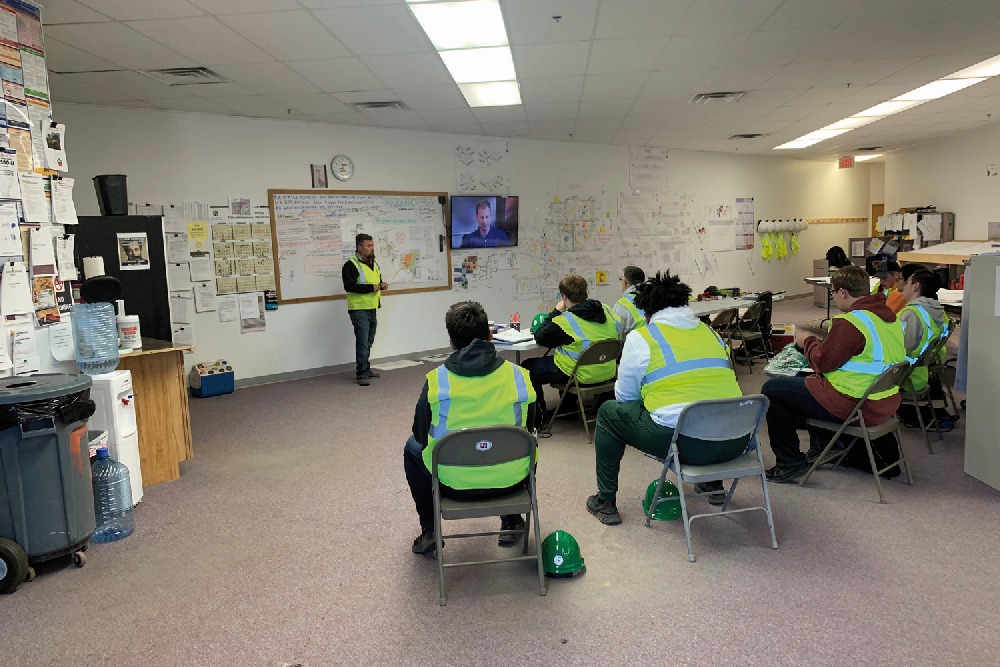
Meetings are often necessary, but unmanaged meetings are top-tier time vampires. A quick alignment session can easily turn into a 45-minute venting session without guardrails.
Every meeting on our jobsites must run on three criteria:
- A defined agenda: Distributed in advance, outlining precisely what will be discussed.
- A clear desired outcome: The goal must be explicit. Are we making a decision, approving a submittal pathway or establishing a sequence? If there isn’t a measurable output, the meeting shouldn’t happen.
- A well-prepared leader: The meeting chair must actively facilitate, keep participants on topic, enforce time limits and assign clear action items before anyone steps out the door.
When meetings are run as tight, purpose-driven operational huddling sessions rather than open-ended roundtables, superintendents get their time back, and trade partners get back to work.
2. Managing unplanned inbound work
On a busy jobsite, a superintendent can easily receive 50-100 inbound calls, texts and walk-ins a day. “The drywall delivery is delayed 30 minutes.” “Where do you want this staging pallet?” “The electrician needs a pathway check on floor three.”
While each request seems minor on its own, this constant barrage creates severe context switching. It transforms a superintendent from a strategic project planner into a firefighter constantly reacting to inbound noise.
The solution is shifting trade communication from reactive disruption to structured logging.
By enforcing a formal, accessible constraints log process/tool, trade partners are empowered and required to log non-emergency delays, material conflicts and site access constraints into a central digital dashboard or structured intake form, rather than picking up the phone.
How the constraints log provides field focus:
- Batch processing: Instead of fielding dozens of scattered phone calls throughout the morning, superintendents can review and address logged constraints during dedicated time blocks.
- Accounting and visibility: A constraint logged on a shared board provides a clear paper trail, making it obvious who owns the resolution and when it needs to be completed.
- Filtering true emergencies: Trade partners quickly learn the difference between an immediate site safety hazard (which warrants an instant call) and a routine scheduling conflict (which belongs in the log).
By streamlining inbound requests into a predictable workflow, superintendents regain hours of uninterrupted focus to walk the site, anticipate upcoming risks and maintain momentum.
3. Eliminating processes without value
Perhaps the most frustrating time vampires are the reporting tasks and administrative processes that have lingered simply because “that’s how we’ve always done it.”
Construction leadership plays a pivotal role here. Executive leadership must actively seek out superintendent feedback and take it seriously. Field operations evolve fast. If a corporate safety log, redundant daily sign-off, or complex software workflow takes 45 minutes to complete but provides zero actionable value to the project or the field team, modify it or delete it entirely.
- Conduct process audits: Regularly ask field teams: Which reports are you generating that nobody reads? What forms take the most time with the least payback?
Value-stream every requirement: Every administrative process should directly support safety, quality, risk mitigation or financial accuracy. If a step doesn’t directly serve one of those pillars, strip it out. - Empower superintendent feedback: Superintendents should have the opportunity to challenge waste seen on the jobsite. When leadership acts on field recommendations to remove useless tasks, it builds trust and streamlines operations company-wide.
Slaying time vampires isn’t about working harder or putting in longer hours; it’s about respecting the superintendent’s primary role as a field leader.
By replacing unstructured meetings with targeted sessions, channeling daily friction into a systematic constraints log and eliminating low-value administrative tasks, we create space for superintendents to do what they do best: build safely, build efficiently and bring projects in on time.
Brandon Kaster is a senior/lead superintendent in Kraus-Anderson’s Bismarck, North Dakota regional office.
 Join our thriving community of 70,000+ superintendents and trade professionals on LinkedIn!
 Search our job board for your next opportunity, or post an opening within your company.
 Subscribe to our monthly
Construction Superintendent eNewsletter and stay current.